Clipping vs Affiliate Marketing — Views or Sales?
Clipping vs affiliate marketing compared: pay-per-view reach at the top of the funnel vs pay-per-sale conversions at the bottom, and how to run both together.

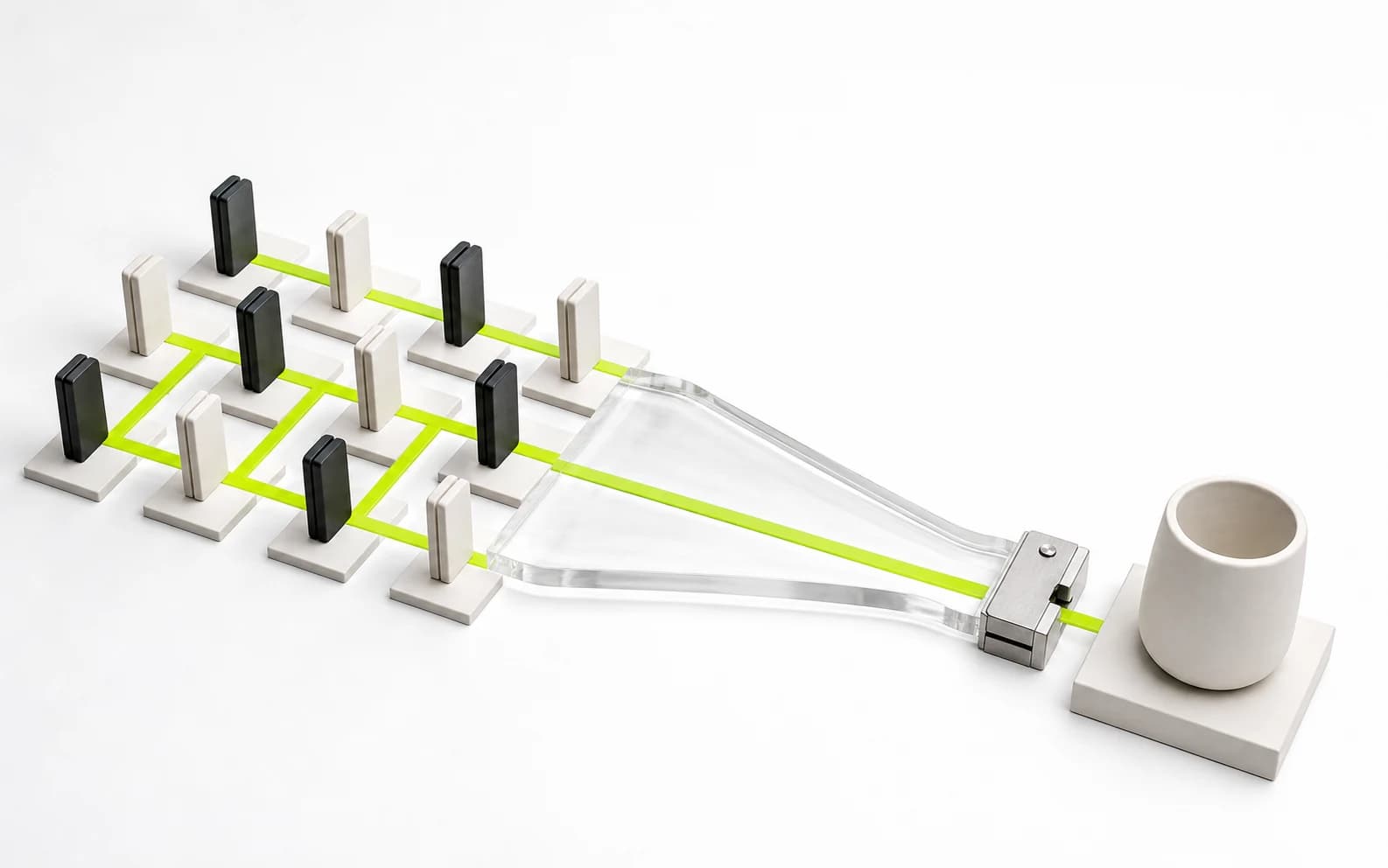
Affiliate marketing pays a publisher a commission, usually 5–30% of the sale, only when someone clicks their tracked link and buys. Clipping pays independent editors a rate per 1,000 verified views of short-form video, whether or not anyone buys anything. Both bill for outcomes rather than impressions, which is why they get compared, but they fire on different events and live at opposite ends of the funnel: affiliate is a last-click conversion channel, clipping is a first-touch reach channel.
So the real question isn't which is better but what job each does — this guide compares them on four axes that actually matter to a media buyer: what triggers payment, where in the funnel it fires, how attribution works, and who carries the performance risk, then lays out when to reach for each and how to run them together. If you're weighing clipping against bought impressions instead, that's a different comparison, covered in clipping vs paid ads.
What's the actual difference between clipping and affiliate marketing?
Both are subsets of performance marketing, but they sit on opposite ends of it. Affiliate is a cost-per-action model: a publisher drops a unique tracking link, and when a customer follows that link and completes a purchase, the publisher earns a cut of the sale — if nothing converts, nothing gets paid. Clipping is a cost-per-view model: a brand posts footage it already owns, clippers cut it into short vertical videos across TikTok, Reels, and Shorts, and they get paid on the verified views those clips earn whether or not anyone buys.
That difference in trigger drags everything else with it. Affiliate only makes sense once demand exists, because it monetizes the final step — someone already shopping clicks a link and converts, so it captures intent that's mostly already there. Clipping does the opposite job: it puts a brand in front of millions of people who weren't looking for it, most of whom will never buy this week. One rewards the last touch before the sale; the other manufactures the first touch that starts the journey. If you want the mechanics of that first-touch model in full, what clipping is walks through the whole loop.
| Axis | Clipping | Affiliate marketing |
|---|---|---|
| Payment trigger | A verified view | A tracked sale, lead, or signup |
| Funnel position | Top — first-touch awareness | Bottom — last-click conversion |
| Pricing | $1–6 CPM (verified views) | 5–30% commission on the sale |
| Attribution | Platform-level view tracking | Cookie / tracking-link, usually last-click |
| Who bears risk | Brand pays for reach that may not convert | Publisher earns nothing unless it converts |
| Follower requirement | None — the clip is judged on its own | None, but link placement needs traffic |
Pay per view vs pay per sale: which one actually costs more?
This is where headline numbers mislead. Affiliate's cost is a percentage of revenue you already earned — typically 5% for retail and ecommerce, 20% or more for digital products — and you only pay it on orders that closed. Clipping's cost is a rate per thousand views, and the honest number isn't the headline CPM. Brands quote $1–6, but marketplace fees (10–25%), agency cuts on managed campaigns (20–50%), and per-clip caps ($100–500 that stop a viral clip from paying out fully) drag the net CPM down to roughly $0.50–4 in practice. That net figure, not the headline, is what you should hold up against affiliate's effective cost per sale.
The two prices answer different questions, so comparing them head-to-head is a category error. Affiliate's cost is fully known and fully conversion-gated: at a 1–3% average conversion rate, you pay commission only on the small slice that buys, and affiliate-driven orders even tend to run 10–15% higher in basket value. Clipping's cost buys reach with no conversion guarantee at all — that's the trade. Normalized to cost per thousand people reached, clipping's $1–5 sits well under paid social's $10–18+, because the brand distributes content it already owns instead of buying the impression outright. You're not paying more or less; you're paying for a different thing.
How does attribution and fraud differ between the two?
Both channels have an integrity problem, and they're mirror images. Affiliate runs on tracking links and cookies, still usually settled last-click, which credits the final touchpoint before the sale. That structure rewards coupon and loyalty extensions that inject themselves at checkout over the channel that actually created the intent, and it's degrading fast in 2025: iOS ATT opt-outs break the click-to-conversion join, browser extensions rewrite referral IDs, and cookie stuffing inflates credit. Roughly 20% of affiliate traffic is estimated to be fraudulent, against a backdrop of $84B in digital ad-fraud losses in 2023 (reported estimates, not audited figures).
Clipping's fraud is the inverse problem: fake views can inflate a count nobody bought. The practical defense is to check views inside a defined campaign window before anyone gets paid. Mainstage describes verified-view reporting and keeps submissions, review, and payouts inside the campaign record. That gives operators a better basis for payout than screenshots or self-reported totals.
Affiliate captures intent near the sale; clipping manufactures awareness at the top. Run both, for different jobs.
When should you use each one?
Reach for affiliate when demand already exists and you want to reward whoever helps close it — an established product with search volume, a comparison-shopping category, a SaaS tool where publishers write reviews. It's the mature default: a $12B US channel with around 80% of brands already running a program, built on standardized tracking through networks like Impact, PartnerStack, Rakuten, and ShareASale, plus creator-native tools like Rewardful and Tapfiliate. Its strength is that you pay after the money's in.
Reach for clipping when the problem is that not enough people know you exist. It's a top-of-funnel engine that almost never gets the last click, so asking it to drive same-week sales on its own sets it up to fail. Where it earns its keep is manufacturing awareness at a scale one account can't touch — clipping campaigns have reportedly driven 1.8B+ views for Stake, 1.1B+ for Rollbit, and 962M+ for Photon (vendor-reported campaign figures, not audited). One caveat worth stating plainly: clipping is the newer channel, and pools like Mainstage's are smaller than the established marketplaces, so the reach is real but the operator is younger than a decade-old affiliate network.
How do you run clipping and affiliate together?
The channels compound rather than compete, and the sequencing is the whole point. Clipping fills the top of the funnel with cheap reach; affiliate and retargeting catch the intent that reach created; and increasingly the same creator carries both at once. This is the handoff most brands miss.
- 1
Manufacture awareness with clipping
Put footage you own in front of dozens of clippers and pay on verified views. This is the first touch — millions of impressions at a low net CPM, most of whom aren't ready to buy yet, but now know you exist.
- 2
Catch the intent with affiliate and retargeting
The people the clips warmed up start searching and comparison-shopping. That's where an affiliate program and retargeting earn the last click, paying out only when someone actually converts.
- 3
Let one clip do both jobs
Clippers routinely drop an affiliate link in the video description, earning on views from the brand and commission from the same clip. The channels stack inside a single post instead of running as separate line items.
- 4
Measure each on its own metric
Judge clipping on cost per 1,000 verified views (CPM), since it has no conversion attribution to give you. Judge affiliate on cost per sale. Holding each to the other's metric is how one gets unfairly killed in a budget review.
Brands like Sephora, Nike, and HelloFresh already run affiliate programs for durable partner-driven revenue alongside performance campaigns for targeted growth — the same use-both logic, one channel for reach and one for conversion. If you want the mechanics of the clipping half handled, how campaigns work on Mainstage walks through brief, review, verification, and payout. And if you're comparing clipping against the other content channel it gets confused with, clipping vs UGC covers that split.
Common questions

Written by
Elliot Padfield · Co-founder, technology & growth
Co-founder of Mainstage, leading technology and growth. A creator-economy operator and former GTM marketer, he's run ops for an 8M-follower creator.
Reach you can’t buy with ads.
Commission original creator posts or turn existing media into native short-form. Set approved-content, verified-view, or hybrid payouts, then run briefs, review, verification, and reporting in one place.