What is clipping in social media?
Social media clipping turns long-form footage into short videos for TikTok, Reels, Shorts, and X. Learn the models, costs, rights, and campaign workflow.

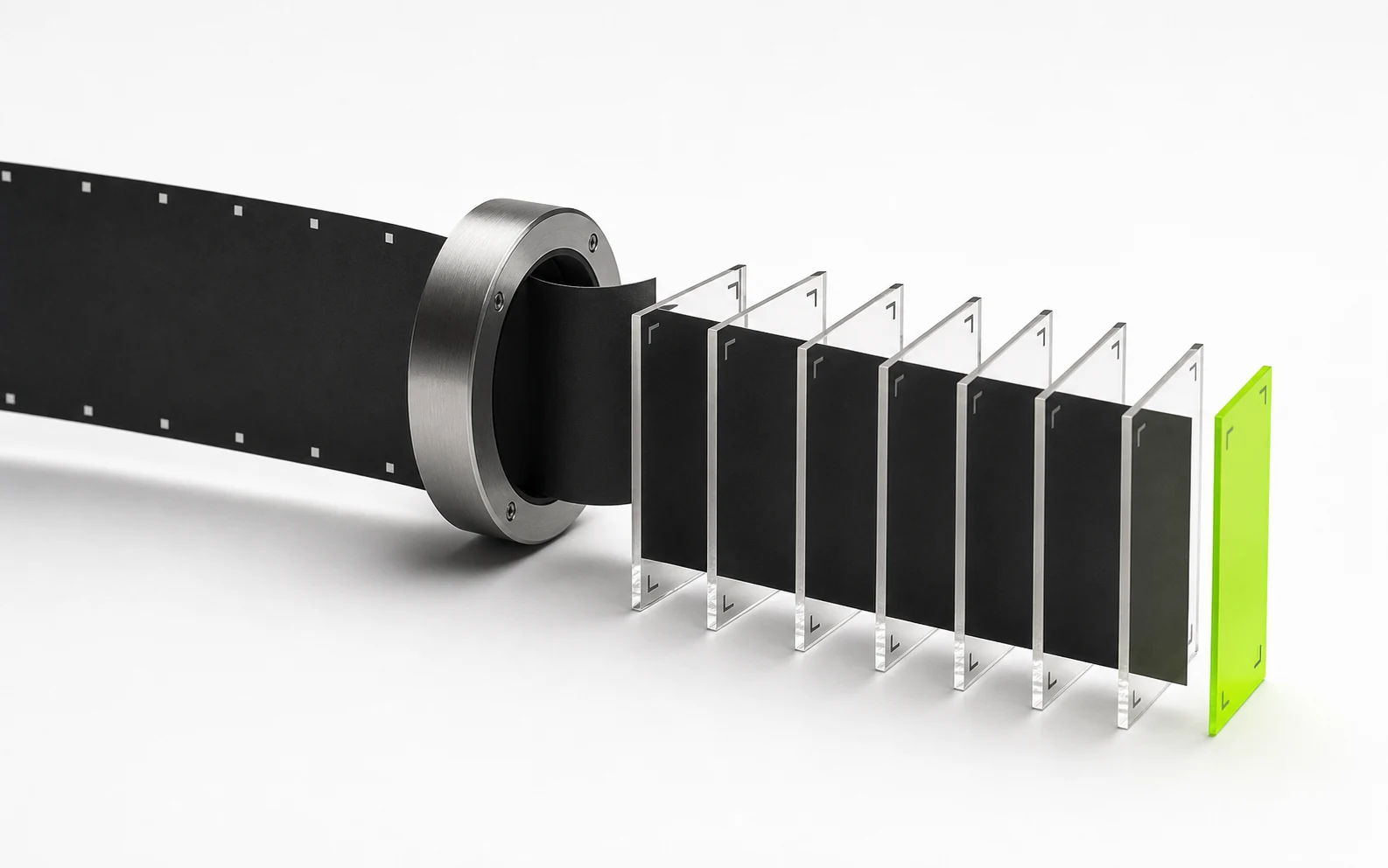
Social media clipping is the process of taking moments from existing long-form video and editing them into short posts for social feeds. The source might be a podcast, livestream, webinar, interview, product demo, or founder video. The finished clips might appear on the original account, on fan pages, or across a network of independent creator accounts.
The editing technique is simple. The operating model is not. Some teams pay an editor per clip. Some fans post without a formal agreement. In a distributed clipping campaign, multiple creators cut and publish the same source footage, then earn a fixed fee, a payment tied to qualifying views, or a combination of both.
What does clipping mean in social media?
A clip is usually a short excerpt built around one complete moment: the useful answer in a podcast, the decisive play in a stream, or the ten seconds in a demo where the product proves its point. Editing adds the hook, crop, captions, pacing, and context needed for the target feed.
What makes clipping distinct is the source. The core footage already exists. If a creator receives a brief and records a new talking-head review, app walkthrough, unboxing, skit, or street interview, that is original creator content. Mainstage treats repurposed-media clipping and original performance UGC as separate campaign lanes, each with its own production costs and review criteria.
The four ways clipping happens
- Owned-account repurposing. A brand or creator cuts long-form footage and publishes the clips on accounts they control.
- Contracted editing. An editor or agency delivers clips for a fee per asset or a monthly retainer. The client usually handles publishing.
- Organic fan clipping. Viewers select and repost moments without joining a paid campaign. Permission and platform-policy questions still apply.
- Distributed clipping campaigns. Independent creators opt into a brief, publish from permitted accounts, submit their posts, and earn according to the campaign terms.
The last model is the one usually meant by clipping campaign. It turns a single editing workflow into a distribution system because different creators can test different moments, hooks, and accounts.
What is a clipper?
A clipper finds moments in existing footage and packages them for short-form feeds. The role can include editing, writing the opening text, adding captions, choosing the account, publishing, and submitting the live post for review. Some clippers are professional editors. Others operate niche pages or clip for a creator they already follow.
A large following is useful only when the campaign values that audience. In performance-based campaigns, the post's qualifying views determine some or all of the payout. Account eligibility, follower minimums, location, content history, and view thresholds vary by campaign, so creators should read the full brief before editing.
How does a clipping campaign work?
A paid clipping campaign connects source footage, a publication brief, creator submissions, review, performance measurement, and payouts. A workable campaign makes every rule visible before anyone posts.
- 1
Supply footage and confirm the rights
The campaign owner identifies the source files, where clips may appear, and any music, guest, or third-party material that cannot be reused.
- 2
Publish the brief and payout terms
The brief defines formats, platforms, required disclosures, banned claims, submission deadlines, measurement windows, rates, minimums, and caps.
- 3
Clippers edit and publish
Eligible creators choose moments, make their cuts, publish on permitted accounts, and submit the live post with the required evidence.
- 4
Review the submission
The campaign checks the post against the brief. A clip may be rejected for rights problems, missing disclosure, prohibited claims, poor edit quality, or an ineligible account.
- 5
Measure and settle the payout
Qualifying views are counted inside the stated window. The payout follows the published rate and stops at the per-post or campaign cap.
How are clippers paid?
There is no single clipping payment model. The terms should match the work being requested and the result the campaign owner wants.
| Model | What triggers payment | Main trade-off |
|---|---|---|
| Per approved clip | A submission passes review | Predictable output, but no built-in reach incentive |
| Per 1,000 qualifying views | A post earns eligible views in the measurement window | Spend follows reach, but definitions and caps must be exact |
| Hybrid | An approved clip plus qualifying views | Covers editing work while retaining a performance incentive |
| Bonus or bounty | A creator reaches a milestone or ranking | Hard budget ceiling, but rewards may concentrate at the top |
Our guide to how much to pay clippers covers rate design, minimums, caps, and payout windows in more detail.
What do clipping campaigns pay?
There is no audited industry-wide CPM for clipping. Public offers vary by platform, niche, eligibility, minimum views, measurement window, and whether the listed number is a guaranteed rate or a maximum. The table below records advertised rates from the public Content Rewards marketplace, Clipping.net, and ReachCat's published campaign benchmark. These are advertised rates, not a market average.
| Source | Sample | Advertised view rate |
|---|---|---|
| Content Rewards | Ten visible offers requiring edits from existing footage | $0.20–$5.00 per 1,000 views |
| Clipping.net | Three visible campaigns with a view rate | $0.40–$3.00 per 1,000 views |
| ReachCat | Platform benchmark by campaign niche | $1.50–$6.00 per 1,000 views |
The Content Rewards sample included Arky, Boxabl, eBay Live, Costco Products, Clash of Clans, Nick Malinosky, Funko, Paul Cheek, CapCut, and BMW M4 offers. Each required editing existing footage rather than filming a new creator video.
The headline CPM cannot tell you whether an offer is good. Check the minimum payout threshold, maximum payout per post, total campaign budget, eligible countries and platforms, view window, and the evidence used to reject invalid traffic. A lower rate with transparent rules and funded payouts can be more dependable than a higher number with no enforceable terms.
Clipping vs original UGC vs influencer marketing
These formats overlap in a media plan, but they buy different work. The cleanest distinction is the source material and the reason the creator is being hired.
| Approach | Starting material | Primary job | Common payment |
|---|---|---|---|
| Clipping | Existing supplied footage | Select, edit, and sometimes distribute moments | Per clip, per view, or hybrid |
| Original performance UGC | Campaign brief | Film a new review, demo, skit, interview, or other concept | Per approved post, per view, or hybrid |
| Influencer marketing | Brand asset or creator concept | Publish to a creator's established audience | Placement fee, affiliate commission, or hybrid |
A campaign can use all three. A brand might commission original creator videos, cut approved footage into shorter variants, then buy a placement from a specialist creator. The clipping vs UGC guide goes deeper on ownership, production, and distribution.
Where does clipping happen?
Most clipping is built for TikTok, Instagram Reels, and YouTube Shorts. X, Facebook Reels, and niche communities can also be part of the brief. A campaign should define each permitted platform because aspect ratios, caption placement, audio rights, disclosure tools, analytics, and measurement windows differ.
Cross-posting the same edit can extend distribution, but it should not be treated as three equivalent results. Report performance by platform and keep the source post URL attached to every submission.
Rights, disclosure, and verified views
These are three separate checks. Permission to edit footage does not remove advertising-disclosure duties. A disclosed paid post does not give the poster copyright permission. A legitimate post can still contain views that the campaign rules exclude.
Rights to the source footage
The safest campaign starts with footage the campaign owner controls and a written grant covering editing and distribution. Music, guests, stock media, broadcast footage, and platform-licensed audio may carry separate restrictions. The U.S. Copyright Office says permission can be obtained from the copyright owner and that fair use depends on the circumstances. Using a short excerpt does not automatically make a commercial clip lawful. Rules vary by jurisdiction, so obtain legal advice when ownership or reuse rights are unclear.
Disclosure of paid relationships
In the United States, the FTC's disclosure guidance says a material connection to a brand should be obvious and the disclosure should appear with the endorsement. Platform rules apply as well. TikTok requires its content-disclosure setting when a post promotes a brand, product, or service, while YouTube asks creators to mark paid promotions. Put the applicable requirement in the brief and review the live post, not only the uploaded video file.
Definition of a payable view
A verified or qualifying view is a campaign term, not a universal measurement standard. The brief should state the platform, measurement source, start and end time, minimum threshold, excluded traffic, post-level cap, campaign-level cap, and what happens if a post is deleted. For example, Whop's Content Rewards terms let campaign owners set a custom rate and maximum payout, and make payment conditional on approval before the cap or end date. Other platforms use different rules.
One source video can produce many clips. The brief decides which clips and views earn a payout.
How do you start with clipping?
If you run campaigns
Start with footage you have the right to reuse, one clear distribution objective, a fixed test budget, and written acceptance criteria. Then choose the payment model and define qualifying views before recruiting creators. The step-by-step guide to running a clipping campaign covers the brief, creator sourcing, review, payouts, and readout.
If you want to make clips
Choose a subject you understand, learn to identify self-contained moments, and practise clean edits before joining a paid brief. Then compare campaigns on rights, rate, thresholds, caps, permitted accounts, and payout terms. The guide to becoming a clipper covers editing, account setup, submissions, and common warning signs.
Common questions

Written by
Elliot Padfield · Co-founder, technology & growth
Co-founder of Mainstage, leading technology and growth. A creator-economy operator and former GTM marketer, he's run ops for an 8M-follower creator.
Reach you can’t buy with ads.
Commission original creator posts or turn existing media into native short-form. Set approved-content, verified-view, or hybrid payouts, then run briefs, review, verification, and reporting in one place.